

INSECURITY AND ITS EFFECTS ON SECONDARY SCHOOL ATTENDANCE IN UKANAFUN LOCAL GOVERNMENT AREA, AKWA IBOM STATE, NIGERIA
DOI:
https://doi.org/10.60787/aasd.vol3no1.86Keywords:
Secondary School, Insecurity, Counselling, Attendance, InsurgencyAbstract
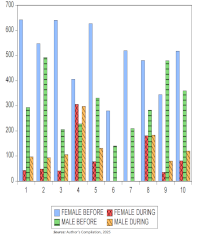
This study examines the effects of insecurity on Secondary school attendance in Ukanafun Local Government Area, Akwa Ibom State, Nigeria. The study used a survey method in the analysis. Research objectives and questions were set to guide the study. Questionnaire known as Effect of Insecurity on School Attendance (EISA) was developed to collate data for the study. A random sampling technique was used to select 107 parents in 10 Secondary Schools that were affected by the activities of insurgency in the study area. Responses to the questionnaire were summarized using percentages to study students attendance in schools before and during the insecurity. The Queer Ladder theory proposed by Daniel Bell 2010 was adopted. It was observed that the level of school attendance before the crisis in the study Area was high and low during and after the crises. The result also revealed gender imbalance. Male student’s attendance during the crisis was higher than female student’s attendance. Furthermore, the result shows that parents who were willing to send their children back to the affected schools were 58 out of 107 and which was merely above 50% of the total population. Based on these findings, the study recommended among others that education administrators should help students overcome emotional distress gotten
during the crises through sensitization programmes, town hall briefings, and visit to churches in the affected communities. It was further recommended that teachers should embrace methods that will reduce emotional anguish instigated by the insurgency. Finally, government should tackle youth restiveness by providing employment give Special incentives to engage aggressive youths in the affected communities.
Downloads
References
Achumba, I.andRobaro, A. (2013). Security challenges in Nigeria and the implications for business activities and sustainable development, Journal of economics and sustainable development, 4 (2).
Adams, O. F., Adedeji, M. S, Majekodunmi, A. Kehinde, B. R. & Adam, T.A (2021).The effects of Insecurity on School System (Secondary schools) in Nigeria. Global Insecurities Challenges and the Ways forward.
Akor, F. I., Otakey H. A, Umar.S.A, Fulani, S. M. & Isah, A. (2021).The impact of Insecurity on Secondary Schools in Nigeria. Art and Social Science Research 12, (1), 19-29.
Armed Conflict Location and Event Data Project (ACLED, 2024); centre for Dmocracy and Development Deutsche Welle (Dw).
Bwala, K. (2021). Electoral violence and national security in Nigeria. A historical perspective in O. A. Isaac (ed). Democratic elections and Nigeria national security, Ibadan: Kingdom Publishers.
Chinelo, A. O. (2022). School dropout pattern among senior secondary students in Delta State, Nigeria.Canadian Center of
Science and Education, 5 (2).
Effiong, U., Ekanem, A., and Ottong, I. (2023). Inclusive Education and Sustainable Learning Opportunities for Persons with Disabilities (Pwds) in Akwa IbomState University, Obio Akpa Campus, Nigeria,(2024). In Book of Readings:Modo, I. V.O., Mboho,
Kingdom Sunday, Udoh, Ekaette Raphael & Effiong, Umo Umoh Academic Practitioners’ Researchfor Sustainable Development Goals in Africa. pp: 1-14.
Ekong, D. (2022). Community development work in Nigeria: Operational problems and strategies for improvement. Humanity Journal of General Studies, Jos, 4(2)
Eric, G.(2022). School attendance falls in northern Nigeria after Boko Haram attacks. International Education News.
Fafunwa, A. B.(2011). Drop-out in the Nigeria education system. In Adesina, S. A. & E. Ajayi (Eds.)Nigeria, education trends
and issues. Ile Ife: University of Ife Press. Nigerian Education Data Survey (NEDS, 2017). Various issues
Okorie, A. (2021). Insecurity and SocioEconomic Development in Nigeria. Journal of Sustainable Development Studies (5) 1.
Okpaga, A., Chijioke U. and Innocent E. O.(2021).Activities of boko haram and insecurity questions in Nigeria.Arabian journal of business and management review, 1(9).
Okafor (2014).Social studies for higher education in Nigeria.Agbo Royal Pace Publications, Nigeria.
Salah, B. (2020). Insecurity and Nigerians global image.Jos: Allen printers.
Saviour, U. and Enobong, N. (2015), Government expenditure on secondary education and sustainble development of Akwa Ibom State.International Journal of Advanced Research in Statistics, Management and Finance 3 (1), ISSN Online: 2354-1644
Saviour, Udo and Emah, E. (2022), Government Expenditure on Human Capital and Economic Growth in Nigeria, Social Sciences and Management International Journal 3 (2).
Rosenje, I.A, Sallee, W. K &Adeniyi, M. S. (2022).Assessment of Insecurity on Quality Education in Nigeria Tertiary Institutions. KWASU International Journal of Education 6.1, 128-184
This day Newspaper 30th Oct. 2018 https:// www. nigerianstat.gov.ng.
Ogunode, S. T. & Fatima, F. O. (2021).The impacts of insecurity on the Nigeria tertiary institutions. Journal of Economics and Environmental Education 8.1, 210-219.
Ogunode N. J, Ahaotu G. A. & ObiEscnekoue V. C. (2021). Effects of Insecurity on School Administration in Nigeria. Middle European Scientific Bulletin, 13. 91-102.
Seji. C., Akuh. A. &Ahon A. T. (2020). Impact of insecurity on Education in Nigeria.American Journal of Library and Information Science Innovation. 2777- 2993.
Nwoye, H. (2000). Overview of the Perceived Influence of Insecurity on Academic Performance in front Lin's local government secondary schools in Niger State, Nigeria International Journal of Professional Development, Learners and Learning. 6.1, 2407-2412.
Udoka, S. T. (1998). Phonotactics in Annang and English.M. A. Thesis of the University of Uyo.
Umoh, E. U., Ekpo,O. J., Effiong, U. U., and Asangausung, O. S. (2023). Entrepreneurship Education and Acquisition of Employability Skills among Business Administration Students of University of Uyo. AKSU Annals of Sustainable Development, 1(2), 87-99
Downloads
Published
Issue
Section
License
Copyright (c) 2026 AKSU Annals of Sustainable Development

This work is licensed under a Creative Commons Attribution-NonCommercial-NoDerivatives 4.0 International License.
Manuscript content on this site is licensed under Creative Commons Licenses. Authors wishing to include figures, tables, or text passages that have already been published elsewhere are required to obtain permission from the copyright owner(s) for both the print and online format and to include evidence that such permission has been granted when submitting their papers. Any material received without such evidence will be assumed to originate from the authors.

 ICIDR Publishing House